
If you’re asking, “I’m in bankruptcy, do I have to sell my land?”, the answer is not always. Under U.S. bankruptcy law, filing for bankruptcy does not automatically mean you lose your land. Whether you keep or sell it depends on the type of bankruptcy you file, your property’s equity, and the exemption laws in your state.
Before making any decisions, it’s important to understand how bankruptcy affects land ownership.
Key Takeaways
- Filing bankruptcy does not automatically require you to sell your land.
- Chapter 7 may involve selling non-exempt property.
- Chapter 13 usually allows you to keep your land.
- Equity and state exemption laws are major deciding factors.
- Professional legal advice is recommended before filing or selling property.
Will Bankruptcy Force Me to Sell My Land?
In many cases, no. If you’re wondering, “I’m in Bankruptcy—Do I Have to Sell My Land?” the answer depends on your specific situation. Some people keep their land throughout the bankruptcy process, while others may have to sell it if the property isn’t protected under applicable bankruptcy exemptions.
Your situation depends on factors such as:
- Type of bankruptcy filed
- Amount of equity in the land
- State bankruptcy exemptions
- Whether the land is vacant, investment property, or part of your residence
- Existing mortgages or liens
Chapter 7 vs. Chapter 13
| Bankruptcy Type | Can You Keep Your Land? |
| Chapter 7 | Possibly. A trustee may sell non-exempt land if it has enough value to pay creditors. |
| Chapter 13 | Usually yes. Most filers keep their property while repaying debts through a court-approved payment plan. |
When Might You Have to Sell Your Land?
A bankruptcy trustee may decide to sell your land if:
· The property is not protected by bankruptcy exemptions.
· It has significant equity after deducting loans or liens.
· Selling the property would generate money for creditors.
· The land is considered a non-essential investment asset.
Vacant land and investment property are generally more likely to be sold than a primary residence.
When Can You Keep Your Land?
Many people are able to keep their land if:
- The property’s equity falls within exemption limits.
- The land has little or no equity.
- It is protected under state or federal exemption rules.
- You’re filing Chapter 13 and making required payments.
- Selling the property would not benefit creditors.
Every bankruptcy case is unique, so outcomes vary depending on your financial situation.
What Is Equity?
Equity is the value you actually own in the property.
Example:
| Land Value | Loan Balance | Equity |
| $90,000 | $60,000 | $30,000 |
If your state protects that $30,000 through exemptions, you may be able to keep your land.
Factors That Affect the Decision
The bankruptcy trustee typically reviews:
- Current market value
- Outstanding mortgage or liens
- Available bankruptcy exemptions
- Property ownership records
- Type of land
- Potential benefit to creditors
These factors determine whether selling the property is worthwhile. If you’re asking, “I’m in Bankruptcy—Do I Have to Sell My Land?” these are the key factors the bankruptcy trustee will evaluate before deciding whether your land may be sold.
Also Read:How to Sell My Land Myself?
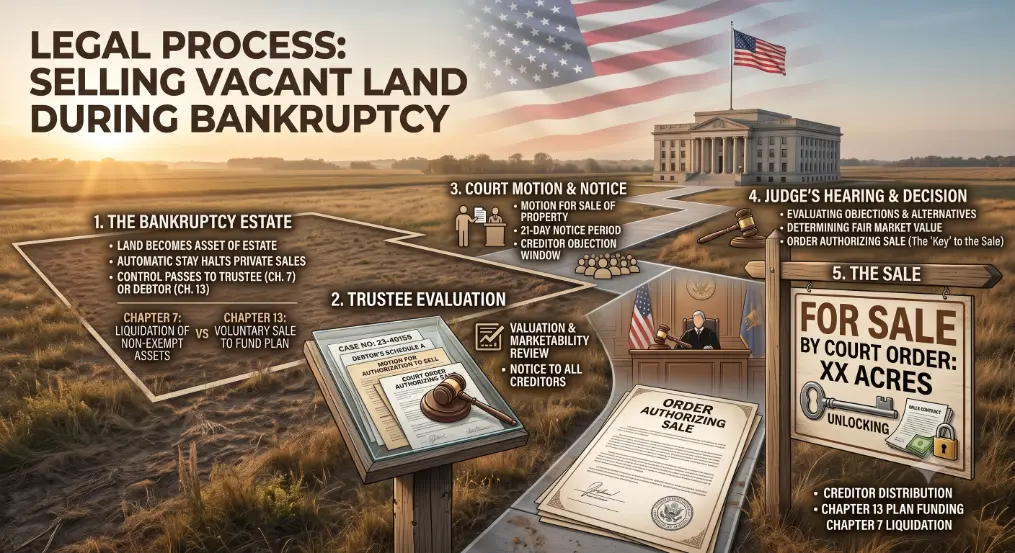
Should You Sell Your Land Before Filing Bankruptcy?
If you’re asking, “I’m in Bankruptcy—Do I Have to Sell My Land?” you may be considering selling your property before filing. Some property owners choose to sell their land before filing to pay off debts. However, this should be done carefully and with legal guidance to avoid complications during the bankruptcy process.
Before selling, remember:
- Sell the property at fair market value.
- Keep records of the transaction.
- Avoid transferring property to family members for less than its value.
- Consult a bankruptcy attorney before completing the sale.
Improper transfers can create legal issues during bankruptcy proceedings.
Tips to Protect Your Property
If keeping your land is your priority, consider these steps:
- Understand your state’s exemption laws.
- Gather accurate property valuations.
- Stay current on secured loan payments when possible.
- Speak with a qualified bankruptcy attorney.
- Explore whether Chapter 13 is a better option than Chapter 7.
Early planning often provides more options.
Frequently Asked Questions
1. I’m in Bankruptcy. Do I Have to Sell My Land?
Not necessarily. If you’re asking, “I’m in Bankruptcy—Do I Have to Sell My Land?” the answer depends on your bankruptcy chapter, the amount of equity you have, and your state’s exemption laws.
2. Can a Bankruptcy Trustee Sell Vacant Land?
Yes. If the land is non-exempt and has enough equity, the trustee may sell it to repay creditors. For many people wondering, “I’m in Bankruptcy—Do I Have to Sell My Land?”, vacant land is more likely to be sold than exempt property.
3. Does Chapter 13 Let Me Keep My Land?
In most cases, yes. Chapter 13 allows many people to keep their property while following a court-approved repayment plan. If your concern is, “I’m in Bankruptcy—Do I Have to Sell My Land?”, Chapter 13 may provide a way to retain ownership while paying off debts over time.
4. Can I Sell My Land Before Filing Bankruptcy?
Yes, but the sale should be completed at fair market value and with legal guidance to avoid future complications. If you’re asking, “I’m in Bankruptcy—Do I Have to Sell My Land?”, selling before filing may be an option, but it should be discussed with a qualified bankruptcy attorney.
5. Do Bankruptcy Laws Differ by State?
Yes. While bankruptcy is governed by federal law, property exemption rules vary from state to state and can affect whether you keep your land. Consulting a local attorney is the best way to understand how your state’s laws apply to your situation.
Also Read: Can an Administrator Sell My Land?