
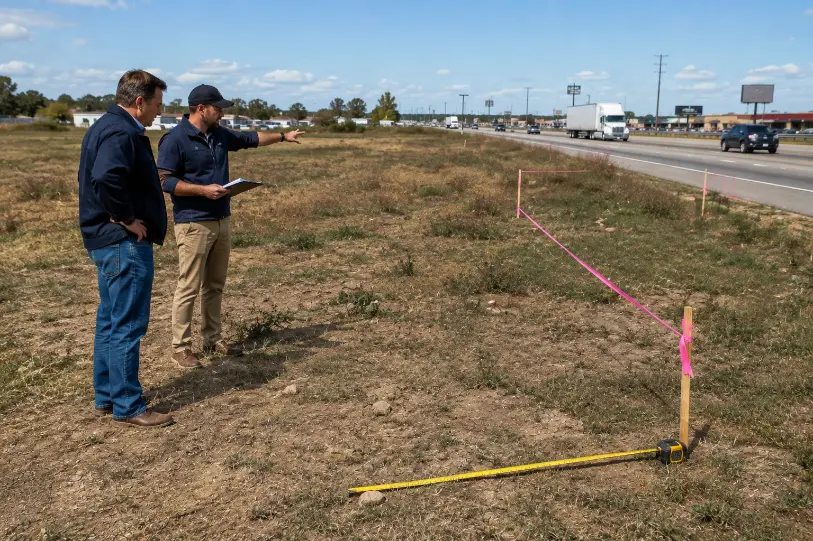
If you own land beside a highway, you may be thinking, “Should I lease or sell my land on highway?” Highway property can be useful for commercial purposes because it offers road access and visibility. However, selling and leasing have different benefits and risks.
Key Takeaways
- Selling provides immediate money but ends ownership.
- Leasing provides regular income while retaining the land.
- Highway access and frontage can affect land value.
- Compare offers and check legal terms before deciding.
Selling gives you money at one time and transfers ownership to the buyer. Leasing allows you to keep ownership while receiving rent for an agreed period. The right choice depends on your financial needs, the location of the land, and what you expect from the property in the future.
Why Highway Land Can Attract Interest?
Land located near a highway can be considered by businesses that need easy access for customers, workers, suppliers, and vehicles.
Depending on local rules, highway land may be used for restaurants, warehouses, workshops, parking areas, storage yards, retail shops, vehicle service centres, hotels, and other commercial activities.
However, highway location alone does not determine the value of land. Road frontage, entry and exit points, nearby businesses, land-use rules, utilities, drainage, and surrounding development can all affect its price and rental value.
Also Read: How to Sell My Land for Bitcoin?
When Should You Sell Highway Land?
Selling may be a suitable option if you need a large amount of money or no longer want to keep the property.
You may consider selling when:
- You have received a good purchase offer
- You need funds for another property or business
- You do not want to manage tenants
- The property is not generating income
- There is strong demand for similar land in the area
- You want to complete the transaction and move on from the property
Before selling, compare the offer with prices of similar highway properties. Look at the size of the land, road frontage, access, location, permitted use, and nearby development.

It is also important to remember that selling means giving up ownership. If land prices increase later, you will not benefit from that increase.
When Should You Lease Highway Land?
Leasing can be a good choice if you want to keep your land while earning regular rent.
A tenant may use the property for a permitted business such as a restaurant, warehouse, vehicle workshop, storage area, parking facility, or retail outlet.
Leasing may be suitable if:
- You want regular income
- You do not need immediate access to a large amount of money
- You want to retain ownership
- You expect the surrounding area to develop
- You have a property that can be used for commercial purposes
A lease agreement should clearly state the rent, security deposit, lease period, renewal terms, permitted use, maintenance duties, construction rights, taxes, and termination conditions.
Do not allow a tenant to begin construction or commercial activity without checking the required permissions.
What Affects the Value of Highway Land?
Several factors can influence the selling price and rental value of highway property.
1. Location
Land close to towns, cities, industrial areas, markets, transport centres, or other busy locations may attract more buyers and tenants.
2. Road Frontage
The amount of land directly facing the highway can affect its usefulness. Good visibility can be important for businesses that depend on passing customers.
3. Entry and Exit
Easy and legal access from the highway can make a property more useful. Restrictions on entry or exit may reduce its commercial value.
4. Land Use
Check whether the property can legally be used for the business proposed by a buyer or tenant. Agricultural, residential, commercial, and industrial land can have different rules.
5. Nearby Development
New businesses, factories, housing projects, roads, and other developments can change demand for land over time.
6. Basic Facilities
Electricity, water supply, drainage, road access, and other facilities can affect how quickly a tenant or buyer can use the property.
Lease or Sell My Land on Highway: How to Decide
| Factor | Lease Your Highway Land | Sell Your Highway Land |
| Income | Provides regular rental income | Provides a one-time payment |
| Long-Term Value | You retain ownership and may benefit from future appreciation | You give up future appreciation |
| Immediate Cash | Usually limited upfront cash | Suitable when you need a larger amount immediately |
| Control | You retain ownership and some control based on lease terms | Ownership transfers to the buyer |
| Future Development | You may benefit from future development around the property | Future development benefits the new owner |
| Risk | Depends on finding a reliable tenant and maintaining the agreement | Less ongoing responsibility after the sale |
| Best For | Owners seeking recurring income | Owners seeking a quick exit or large lump-sum payment |
Conclusion
The decision to lease or sell my land on highway depends on what you want from the property. Selling can provide immediate money, while leasing can provide regular income without transferring ownership.
Before making a decision, compare the property’s market value with its possible rental income. Check access, land-use rules, nearby development, and legal documents. Getting advice from a property professional or lawyer can also help you understand the terms before you sign a sale or lease agreement.
Frequently Asked Questions
1. Is highway land suitable for commercial use?
If you are considering Lease or Sell My Land on Highway, the property can be suitable for commercial use. This depends on local land-use rules, road access, property location, and required permissions.
2. Should I lease or sell my land on highway?
When deciding Lease or Sell My Land on Highway, selling can provide a large payment at once. Leasing can provide regular rent while allowing you to keep ownership. Your financial needs should guide the decision.
3. What can I use highway land for?
If you are planning to Lease or Sell My Land on Highway, the property may be used for restaurants, warehouses, parking areas, workshops, storage yards, retail shops, and other approved activities, depending on local rules.
4. How can I find the value of my highway land?
Before deciding to Lease or Sell My Land on Highway, compare similar properties in the same area. Consider land size, highway frontage, access, land use, nearby development, and recent property transactions.
5. What should be included in a land lease agreement?
If you choose to Lease or Sell My Land on Highway, a lease agreement should clearly mention the rent, security deposit, lease period, renewal terms, permitted use, maintenance responsibilities, taxes, construction rights, and termination conditions.
Also Read: Can an Administrator Sell My Land?