
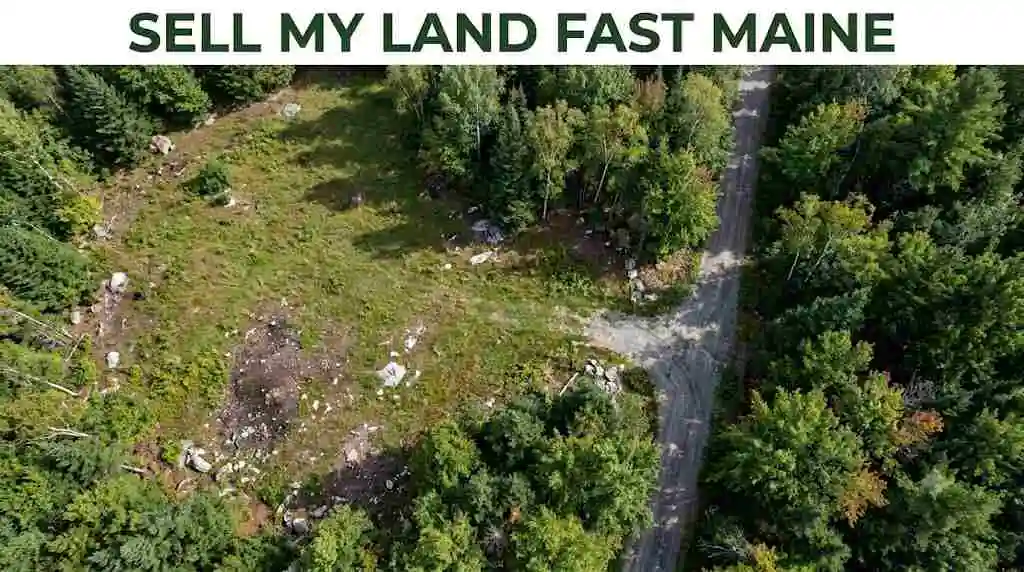
Searching “sell my land fast Maine” typically signals that you’re tired of waiting. Perhaps the tax bills keep showing up, you inherited a parcel you’ll never develop, or your plans simply changed. Whatever has brought you here, the goal is a sale that moves quickly, pays a fair price, and doesn’t hit you with unpleasant surprises at closing.
A quicker sale is achievable if you know what your options are and prepare your documents ahead of time. The trade-off is that speed and price tend to move in opposite directions. Below, you’ll find both sides of that trade-off, along with the Maine-specific details that often catch sellers off guard.
Key Takeaways
- Expect it to take longer to sell vacant land in Maine than a house, since fewer people are shopping and each one must first verify access, soil, and zoning.
- If your goal is to sell my land fast Maine style, a direct cash sale may close within weeks, though the offer will likely land below full market value.
- Working with a local land broker, or pricing a private listing well, usually yields more money but takes longer.
- Clean title, a tax map and lot number, and an up-to-date survey eliminate the biggest sources of delay.
- Waiting carries a cost. In Maine, an unpaid tax lien can foreclose 18 months after filing, so overdue taxes need attention early.
- Judge offers by what you actually take home after fees, taxes, and deposits rather than by the headline figure.
- Maine’s real estate transfer tax is $2.20 for each $500 of the sale price, and buyer and seller usually share it.
- Sellers who live outside Maine may have 2.5% held back at closing on sales of $100,000 or more, unless they ask for an exemption or reduction in advance.
Why Land Takes Longer to Sell in Maine
Homes sell on emotion, but land sells on paperwork. Someone touring a three-bedroom colonial can imagine dinner in the kitchen. Someone standing on twenty wooded acres is asking something else entirely. Am I allowed to build here? Can I cross a neighbor’s property to reach the road? Will the soil support a septic design?
Getting those answers takes time, and financing hasn’t even entered the picture yet. Lenders tend to be wary of raw land, so many buyers either pay cash or put down a large deposit. That narrows the group of qualified buyers even further.
Maine adds some local complications for anyone who wants to sell vacant land in Maine. Snow can conceal boundaries and terrain for months, rural parcels frequently sit far from town services, and many lots are bought as seasonal or recreational property. Those factors explain why a Maine land sale often stalls after a parcel is listed and then ignored, and why a “sell my land fast Maine” plan has to begin with preparation, not just a listing.
What It Costs You to Keep Waiting
Owning land costs money even when nothing happens on it. Property taxes arrive every year, insurance or liability can be a concern, and each additional season brings more upkeep, trespassing worries, and mental clutter.
Unpaid taxes pose the larger danger. A Maine town can record a tax lien certificate at the county Registry of Deeds. If the lien, interest, and costs remain unpaid 18 months after that filing, the right to redeem the property expires. Put simply, the town may end up owning your land. If you’re behind on taxes, fix that first or tell any buyer about it up front.
How to Sell My Land Fast in Maine: Your Real Options
There’s no single best way to sell land fast in Maine. The right choice depends on how much time you have and how much money you’re willing to give up for speed. Here’s a short comparison before the details.
| Selling route | Typical speed | Price potential | Your effort |
| Local land broker | Months | Highest | Medium |
| Selling it yourself | Varies | High | High |
| Direct cash buyer | Weeks | Often below market | Low |
| Developer or builder | Moderate to slow | Can be high | Medium |
| Seller financing | Moderate | High, with interest | Medium |
| Neighbor or land trust | Varies | Fair | Low to medium |
List with a local land broker
If you sell vacant land in Maine through a broker, you get someone who works rural Maine and knows who’s actively searching for acreage, whether hunters, builders, or families seeking a camp lot. You’ll pay a commission, and the process may take months, but this approach usually delivers the best price.
Sell it yourself
You can advertise the parcel on land marketplaces and local classifieds, then run showings and negotiations yourself. That avoids the commission and suits people who are comfortable pricing land and vetting buyers. Plan on more legwork with the paperwork, because you’ll still want an attorney or title company at closing.
Take a direct cash offer
This is the route most people mean when they search for sell my land fast Maine. Because a cash buyer bypasses the bank, closing can happen within a few weeks. The cost is price: investors need margin to resell at a profit, so offers generally come in below what the open market might pay. For sellers dealing with tax bills or settling an estate, that exchange can make sense.
Offer seller financing
When a buyer can’t qualify for a loan, you can step in as the lender. You collect a down payment, then monthly payments with interest. This can broaden your pool of buyers and increase your price, but your money arrives gradually rather than all at once, and a lawyer should prepare the note and security documents.
Check with neighbors and land trusts
Owners of adjoining land often value a parcel more than anyone else, since it enlarges their own property. Local land trusts and conservation organizations sometimes buy or accept land as well. These transactions can be quiet, quick, and drama-free.
Sell to a developer or builder
When your parcel is buildable and near a town, a builder or small developer may offer more than a recreational buyer would. The drawback is timing. Developers frequently request a due diligence period to check permits, soils, and utilities, so closing can take longer than with a cash sale.
Sell only part of your land
Some owners want to hold onto a few acres and sell the remainder. That can work well, but dividing a lot may set off municipal or state subdivision review. Speak with your town planning office and a licensed surveyor before you promise a buyer a specific piece.
Get Your Paperwork in Order First
Surprises slow sales more than anything else. Before you start to sell land fast in Maine, collect the basics.
- Your deed, plus the town tax map and lot number
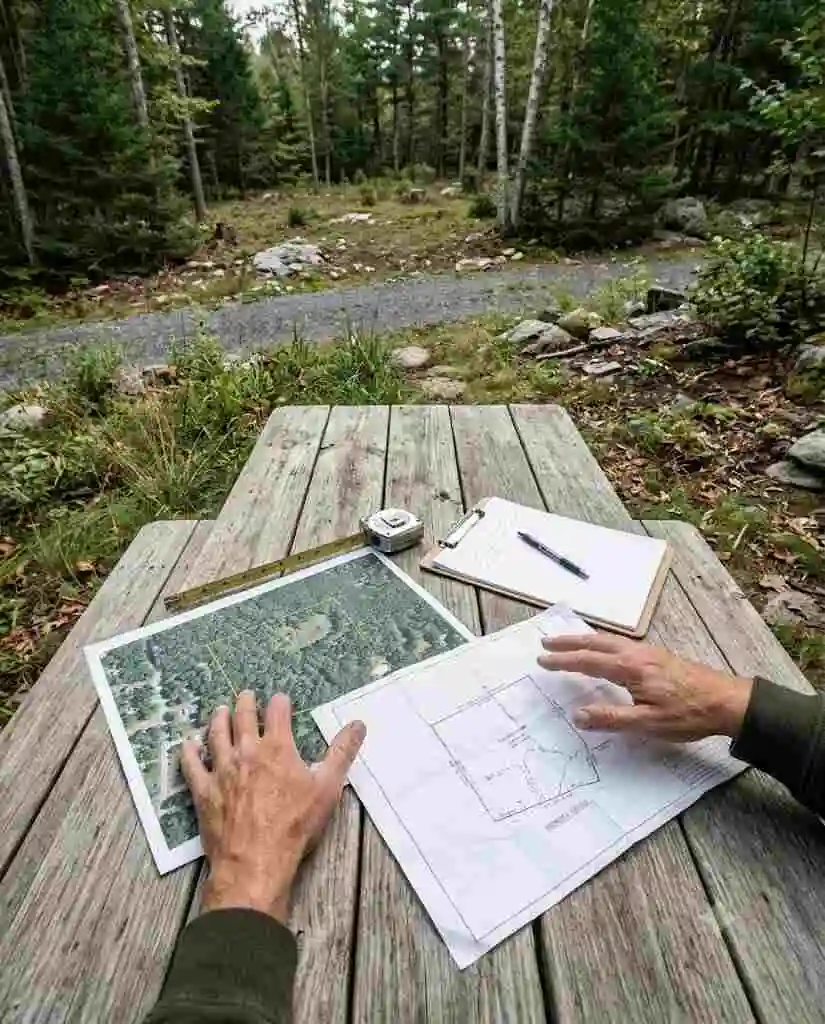
- An up-to-date survey, or at minimum a clear description of the boundaries
- Proof of ownership, especially when the deed still lists a relative who has died
- Any easements, rights of way, or shared road agreements
- Current property tax bills and any balances still owed
- Payoff figures for any mortgage or lien
When land passes to you through a family estate, probate must be finished, or far enough along that you have the legal authority to sign. This one issue holds up more inherited land sales than any other. A Maine real estate attorney or title company can explain exactly what you need.
Back taxes needn’t kill a sale. Often they can be settled from your proceeds at closing. Even so, knowing the precise amount beforehand lets you evaluate each offer honestly.
What Maine Buyers Look At Before Making an Offer
Serious buyers research carefully. The more answers you can give them at the start, the faster they’ll act.
- Legal access and road frontage. Parcels that are landlocked or hard to reach are difficult to sell. Spell out whether access comes from a public road, a private road, or an easement.
- Zoning and shoreland rules. Each town sets its own zoning, and land close to lakes, rivers, streams, or wetlands may face added building restrictions. Parcels in Maine’s unorganized territories are overseen by the state’s Land Use Planning Commission rather than a town.
- Soils and septic. Without public sewer, a buildable lot needs soil able to support a septic system. A soil evaluation by a licensed site evaluator can make a lot considerably more appealing.
- Utilities. For anyone planning to build, the distance to power lines and the cost of a well and driveway are important.
- Timber and natural resources. Mature trees can add value, and an estimate from a forester gives you a concrete figure to cite.
- Current-use tax programs. If your land is enrolled in a program like Tree Growth or Farm and Open Space, ask your town assessor how a sale or a change in use might affect it before accepting an offer. Withdrawing can carry penalties.
Best Time to Sell Land in Maine and Why Location Matters
Land is simplest to show when the ground is clear and access roads are open, which generally means spring through fall. Buyers planning a summer camp or a building season often begin searching in spring. Winter sales are still possible, but snow covers boundaries and many buyers prefer to walk the land first.
Location also determines who your buyers are. Parcels in southern and coastal Maine, and near cities such as Portland, tend to draw builders and second-home buyers. Large rural tracts in the north and west more often appeal to recreational, hunting, and timber-focused buyers, and those sales may take longer. Aim your marketing at whoever is most likely to want your particular parcel.
Selling Maine Land From Out of State
Many Maine landowners live elsewhere, often because they inherited a family parcel. You can sell without making the trip. Many attorneys and title companies handle remote signings, and a power of attorney may be an option in some cases when everyone agrees. Begin early, because out-of-state sellers must also prepare for the nonresident withholding rules discussed below.
How to Price Your Land Without Guessing
Overpricing is the top reason land lingers, while underpricing leaves money on the table. Begin with the prices similar parcels actually fetched in your town and neighboring towns, not what sellers are asking. County Registry of Deeds records and a local land broker can help you locate those figures.
Compare size, road frontage, water access, and buildability, not acreage alone. Ten buildable acres along a paved road can be worth much more per acre than forty acres of wetland behind a locked gate. If the parcel is unusual, a professional appraisal is worth its fee.
If your aim is to sell land fast in Maine, setting the price slightly under the nearest comparable sale can generate several inquiries within days. Setting it higher may bring silence for months. Decide what speed is worth to you and price to match.
Costs and Taxes to Expect When You Sell Land in Maine
Understanding your costs in advance keeps a “sell my land fast Maine” plan from ending in a disappointing sale. Typical expenses are listed here.
- Real estate transfer tax: $2.20 for each $500 of value, usually shared equally by buyer and seller. On a $50,000 sale, the total comes to $220, so your portion is $110.
- Recording fees at the county Registry of Deeds
- A broker’s commission, if you list with an agent
- Fees for an attorney or title company
- The cost of a survey or soil evaluation, if you order one
- Unpaid property taxes or liens, which are paid out of your proceeds
Owners who live outside Maine have one more item to plan for. Maine generally requires the buyer to hold back 2.5% of the sale price from a nonresident seller as an estimated tax payment toward any Maine tax owed on the gain, and the rule covers sales of $100,000 or more. You can learn how to request an exemption or reduction on the Maine Revenue Services real estate withholding page, and that request must reach the state at least five business days before closing. On a $120,000 sale, for instance, $3,000 would be withheld unless it is reduced or waived.
Federal capital gains tax may apply as well if you sell for more than your cost basis. Since the outcome depends on how long you’ve held the land and what you paid, consult a CPA before signing. This article offers general information, not legal or tax advice.
Your Step-by-Step Plan for a Faster Land Sale
If you want to sell my land fast Maine style without cutting corners, most sellers do well following this sequence.
- Verify ownership and resolve any title problems, including probate.
- Gather your deed, tax map and lot number, survey, and tax bills.
- Look up recent comparable sales to arrive at a realistic price range.
- Pick your route: broker, private sale, cash buyer, or a combination.
- Collect several offers or inquiries so you can compare them directly.
- Ask an attorney or title company to review the purchase agreement before you sign.
- Close, pay any taxes and liens out of the proceeds, and record the deed.
How to Compare Offers Side by Side
A higher figure isn’t automatically the better deal. Put each offer on equal footing before you choose.
- Net proceeds after commissions, closing costs, taxes, and liens
- The closing date, and how firm it is
- Any earnest money or deposit, and whether it can be refunded
- Contingencies, such as financing, permits, or soil tests
- Who covers closing costs and the transfer tax
- Proof of funds or a pre-approval letter
How to Protect Yourself When Dealing With Cash Buyers
Search “sell my land fast Maine” and plenty of cash-buyer ads appear. Many are legitimate, but this corner of real estate also draws aggressive operators. A few habits will protect you.
- Collect at least two or three offers so you know what’s typical for your parcel.
- Find out who the real buyer is. Some companies sign a contract and then try to pass it to someone else, which can delay or derail your closing.
- Never pay upfront fees to get an offer or to unlock your funds.
- Make sure closing goes through a reputable title company or attorney.
- Read the deadline, earnest money, and cancellation terms before you sign.
- Request proof of funds before committing.
- Verify any wire instructions by phone using a number you trust, because wire fraud targets real estate closings.
- Step away from anyone who pushes you to sign the same day.
Common Mistakes That Slow Down a Maine Land Sale
Plenty of sellers who type “sell my land fast Maine” into Google undo their own progress through a few avoidable slips.
- Setting a price based on emotion or on a neighbor’s asking price
- Listing without clear photos of the access road, boundaries, and best features
- Overlooking unresolved heirs or liens until the buyer’s attorney discovers them
- Leaving out soil or survey information that buyers will request anyway
- Taking the first offer without comparing alternatives
- Forgetting to ask about tax program penalties before closing
What Happens at Closing in Maine
At closing, you sign a deed that transfers the land to the buyer. The type of deed depends on the transaction, and your attorney or title company will suggest the appropriate one. The deed is recorded at the county Registry of Deeds together with a Real Estate Transfer Tax Declaration, and the transfer tax is collected then.
Unpaid property taxes, liens, or mortgage balances are paid from your proceeds, and the remainder reaches you by check or wire. Request a settlement statement in advance so every figure is clear before you sign.
FAQs About Selling Land Fast in Maine
How can I sell my land fast in Maine?
The fastest way to turn a “sell my land fast Maine” goal into a closed sale is a direct cash offer, which can close in a few weeks if your title is clear. Listing with a broker or selling privately generally pays more but takes longer. You aren’t legally required to use a realtor, though an attorney or title company will handle closing either way.
How long does it take to sell land in Maine?
No fixed timeline exists. Listed parcels often take months and sometimes longer, depending on price, location, and access. A cash sale can finish in a few weeks. Title issues, probate, or a missing survey can add time to any route.
Who pays the transfer tax when you sell land in Maine?
Maine’s real estate transfer tax is $2.20 per $500 of the sale price, and buyer and seller usually split it evenly. Some transfers are exempt and the split can be negotiated, so confirm the details with your attorney or title company.
Can I sell inherited land in Maine quickly?
Yes, once you have legal authority to sell. That usually means probate is finished or far enough along for the personal representative to sign. Make sure the deed and the estate paperwork match, since title questions are the most frequent delay with inherited land.
Is it safe to sell land to a cash buyer in Maine?
It can be, provided you stay careful. Obtain multiple offers, confirm who is actually buying, never pay upfront fees, and close through a title company or attorney. A fair buyer will give you time to read the contract.
Bottom Line
Deciding how to sell my land fast Maine buyers will take seriously comes down to one trade-off: time versus money. A cash sale is the quickest path, while a broker or private listing usually pays more. Whichever you choose, clean title, realistic pricing, and clear information about access, soil, and zoning shorten the timeline.
Begin by pulling your deed, tax map and lot number, and any survey, then compare at least two offers or routes before committing to any Maine land sale. Follow those steps in order and you can sell land fast in Maine on your own schedule and leave knowing you made a sound choice.
Last updated: October 2026. Tax and withholding rules can change, so confirm current figures with the relevant Maine agency or a qualified professional before you act.