
Selling land is different from selling a house. Vacant land may take longer to attract the right buyer because its value depends on factors such as location, access, zoning, size, development possibilities, and local demand. If you are wondering how to sell my land at auction, an auction can be one option to consider when you want to reach multiple potential buyers and create a competitive bidding process.
Key Takeaways
- Understand how land auctions work
- Research your property’s market value
- Compare auction fees and terms
- Prepare clear property information
A land auction gives interested buyers an opportunity to compete for your property through bidding. It can be a useful option in the right situation, but it is important to understand the process before putting your land up for sale.
Also Read: How Do I Sell My Land to Shale Miners?
How Does a Land Auction Work?
A land auction is a sale where potential buyers submit bids for a property during a specific period. Depending on the auction company, the event may take place online, in person, or through a combination of both.
Before bidding starts, the property is advertised to potential buyers. The listing normally provides information about the parcel, including its location, size, access, taxes, zoning, and any known restrictions.
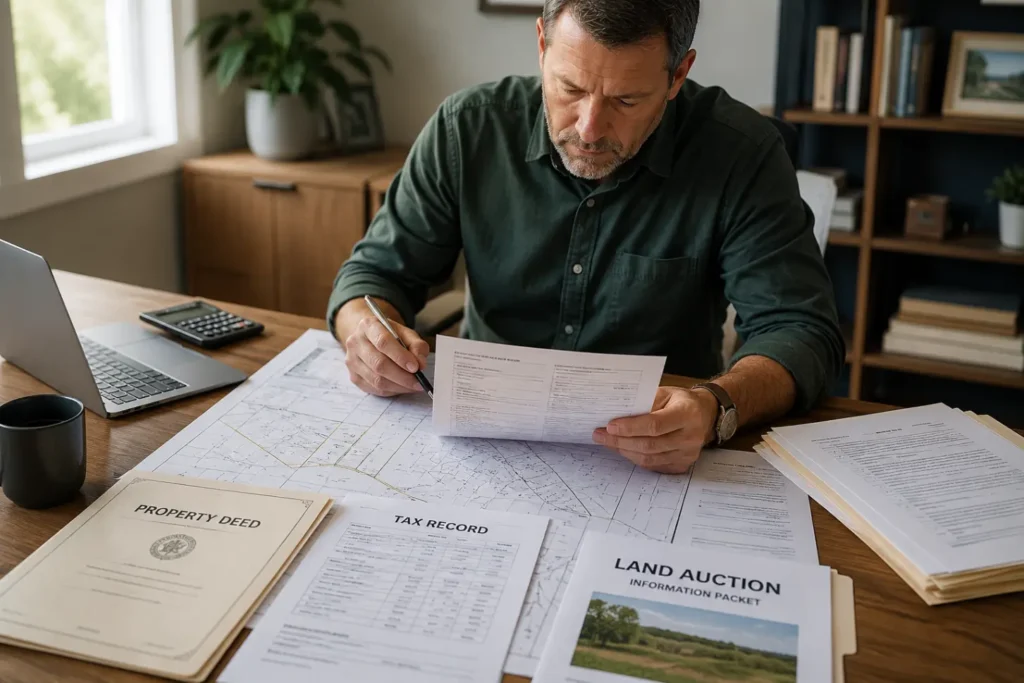
When the auction opens, buyers place their bids according to the stated rules. If the bidding reaches the seller’s required price, the successful bidder can move forward with the purchase.
Some auctions use a reserve price. This is the minimum amount the seller is willing to accept. If bidding stays below that figure, the property may remain unsold.
Why Sell My Land at Auction?
An auction may be worth considering when you want to expose your property to several potential buyers rather than negotiate with one buyer at a time.
Some possible advantages are:
- Buyer competition: Multiple bidders may compete for the same parcel.
- Set timeframe: The auction provides a defined period for receiving bids.
- Online exposure: Online auctions can reach buyers from different locations.
- Clear bidding process: Buyers understand how offers will be submitted.
- Opportunity for a competitive price: Strong demand can increase the final bid.
However, an auction does not guarantee that your land will sell for the amount you want. If there are few interested buyers, the final bid may be lower than expected.
Also Read: How to Sell My Land Myself?
Steps to Sell Your Land at Auction
1. Understand Your Property
Before contacting an auction company, make sure you know the basic facts about your land. Check the parcel size, legal description, road access, zoning, taxes, utilities, and any restrictions that could affect its use.
This information will also help you answer questions from potential buyers.
2. Estimate the Market Value
Research recent sales of similar parcels in the same area. Comparing properties with similar sizes, locations, access, and permitted uses can give you a better idea of what buyers may be willing to pay.
Do not base your expectations only on how much you originally paid for the land. Current market conditions are more relevant to the property’s present value.
3. Compare Auction Companies
If you decide to use an auction service, speak with more than one company. Ask about its experience selling land and find out exactly what is included in the service.
Important questions include:
- What commission will I pay?
- Are advertising costs separate?
- How will my property be promoted?
- Is there a reserve-price option?
- Who manages the closing?
- What happens if the property does not sell?
Getting these answers in writing can help you avoid unexpected expenses.
4. Prepare the Property Listing
Potential buyers need enough information to decide whether they want to bid. A good listing should provide clear and accurate details rather than relying on general descriptions.
Consider including:
- Recent photographs
- Property maps
- Parcel size
- Location details
- Road access
- Zoning information
- Tax details
- Utility availability
- Easements or restrictions
- Relevant auction conditions
If there are known limitations on the property, disclose them rather than leaving buyers to discover them later.
5. Read the Auction Agreement Carefully
The contract with the auction company can affect your final proceeds and your responsibilities as the seller. Review the commission structure, marketing charges, reserve price, cancellation rules, closing process, and payment schedule.
If you are unsure about a legal provision, getting independent professional advice before signing can be worthwhile.
Land Auction vs. Traditional Sale
| Consideration | Auction | Traditional Sale |
| Price setting | Buyers compete through bids | Seller negotiates with buyers |
| Selling period | Usually predetermined | Can continue until sold |
| Buyer activity | Several buyers may participate | Often handled through individual offers |
| Seller control | Depends on auction terms | Generally greater during negotiation |
| Marketing | Concentrated around the auction | Usually continues throughout the listing |
| Sale outcome | Depends on bidding | Depends on finding and negotiating with a buyer |
What Should Landowners Watch Out For?
Before choosing an auction, consider the possible downsides. A property may not receive enough attention to create meaningful competition. The winning bid may also fall below your expectations, particularly if the land has limited demand.
You should also account for auction-related expenses. Commission, advertising, administrative charges, and closing costs can affect how much money you actually receive.
For some properties, selling directly to a land buyer or using a traditional listing may make more sense.
Is Selling Land at Auction Right for You?
If you are searching for a way to sell my land at auction, start by looking at the property from a buyer’s perspective. Is there strong demand for land in the area? Is the property easy to access? Are its zoning and boundaries clear? Are your documents in order?
If the answers are positive, an auction could be a practical selling route. If demand is limited or you need a specific price, another selling method may be worth considering.
The goal is not simply to sell quickly. It is to choose a method that fits your property, financial needs, and expectations.

Frequently Asked Questions
1. Can I sell vacant land through an auction?
Yes. If you want to sell my land at auction, vacant land can be offered through an auction, including certain rural, recreational, inherited, and development parcels. Local laws and auction requirements may apply.
2. Can I decide the lowest price I will accept?
Some auction arrangements allow sellers to establish a reserve price. If you plan to sell my land at auction, ask the auction company whether you can set a minimum acceptable price and how the reserve works.
3. Does a land auction guarantee a higher selling price?
No. Choosing to sell my land at auction does not guarantee a higher price. Several interested buyers may increase the final bid, but the result depends on demand, property condition, location, marketing, and bidding activity.
4. What information should I provide to buyers?
If you want to sell my land at auction, provide accurate information about the property’s size, location, road access, zoning, taxes, utilities, boundaries, and known restrictions. Documents such as surveys and title records can also help buyers evaluate the property.
5. What if my land does not sell at auction?
If you decide to sell my land at auction and the property does not receive an acceptable bid, your options will depend on the auction agreement. You may be able to offer the property again, negotiate with an interested buyer, or choose another selling method.