
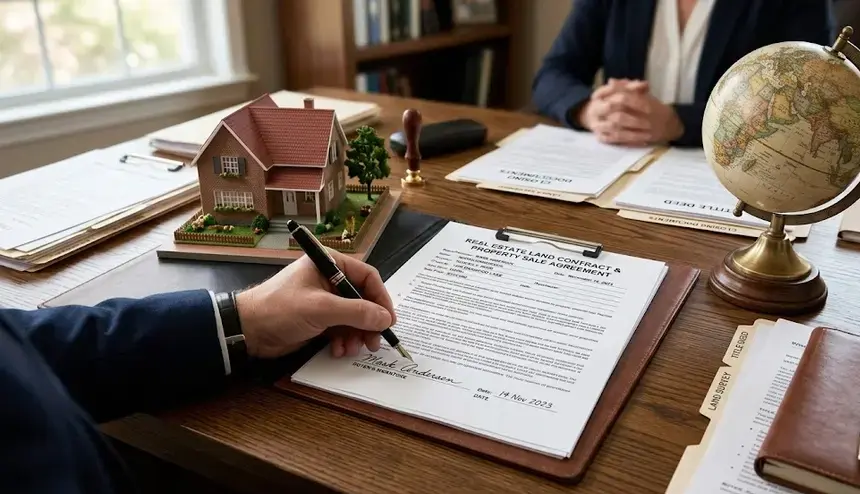
Sell my land contract is the search many owners type after years of collecting monthly payments on land they financed themselves. The checks that once felt like a nice bonus start to feel slow, and a lump sum begins to look far more useful. The good news is that note investors across the United States buy these deals every day.
This guide explains what you are actually selling, how buyers settle on a price, what the process costs, and the mistakes that quietly shrink a payout. It also covers a question that trips up plenty of sellers: what changes if you are the one still making payments.
Key Takeaways
- You are selling your seller’s position and the stream of payments attached to it.
- Expect offers below your unpaid balance, often roughly 70% to 90% of it.
- A big down payment, solid borrower credit and a clean payment history all push the price up.
- Tidy paperwork can shorten the timeline from months to a few weeks.
- A partial sale can give you cash now and income later.
- State law shapes the transfer, so get a local attorney involved early.
- Talk to a tax professional before you sign anything.
What You Are Really Selling in a Land Contract Deal
A land contract, also called a contract for deed, is a seller-financed agreement. Both names describe the same arrangement. Your buyer pays in installments and gets the right to use the property. You keep legal title until the balance is paid, while the buyer holds equitable title in the meantime.
When you sell, you hand your side of that arrangement to an investor. The investor takes over your right to collect payments and your duty to deliver the deed at payoff. The payment amount, interest rate and payoff terms stay exactly as written.
Most property buyers barely notice the switch. They receive a written notice and start sending payments to a new address.
You may also see this called selling a seller-financed note, or when you sell a land contract to an investor. Owners who search sell my land contract note are describing the same deal. The paperwork type, whether land contract, contract for deed or recorded mortgage, changes how title moves. It does not take away your right to sell the income stream.
Straight vs. wrap-around contracts
In a straight contract, you own the property free of any loan and simply finance the buyer. In a wrap-around, you still owe your own lender, and your buyer’s payment covers that loan with the remainder as your profit. Wrap-arounds need extra care at closing, which we cover below.
Why Owners Choose to Cash Out
The reasons vary, but a few come up again and again:
- Cash for a new purchase or a business opportunity
- Medical bills, retirement needs or other large expenses
- Settling an estate or dividing an inheritance fairly
- Planning for senior care costs, including Medicaid eligibility
- Getting out of the day-to-day work of tracking payments and tax forms
- Less worry about a buyer who might fall behind
- Moving money into an investment with a stronger return
Whatever your reason to sell my land contract, none of them is wrong. Just remember that taking cash early always comes with a price, which brings us to the numbers.
How Much Will Buyers Pay When I Sell My Land Contract?
Nearly every offer lands below the remaining balance. Industry sources commonly describe a range of roughly 70% to 90% of what is still owed, with stronger contracts near the top and riskier ones near the bottom.
Say your buyer still owes $60,000. At 70% to 90%, offers would run from $42,000 to $54,000. That gap is what the investor charges for waiting years to be repaid and for carrying the risk of a default.
What moves the price up or down
Investors are pricing risk. Note buyers often point to these factors:
- Down payment. Contracts where the buyer put down roughly 15% to 30% tend to price best.
- Borrower credit. A decent credit score signals the payments will keep coming.
- Remaining term. Shorter payoff periods, around 15 years or less, are easier to sell than very long ones.
- Interest rate. A rate a few points above what banks charge makes the note more attractive.
- Balloon payments. A balloon can shorten the payoff, but buyers want to see that the borrower can actually handle it.
- Payment records. Bank-backed or servicer statements carry weight. Handwritten receipts do not.
- Insurance and title. Active hazard insurance and a clean title commitment remove doubts.
- Performing or not. A contract with on-time payments sells at a far better price than one with late or missed payments.
Before you accept anything, compare the discount with what you would earn by simply holding on. If the interest rate is healthy and payments are reliable, waiting may be worth more than a quick payout.
Is It Vacant Land or a House?
Property type matters more than most sellers expect. Homes in established markets attract the widest pool of buyers. Raw land, especially in rural areas, can narrow that pool, since investors worry about resale value if they ever have to take the property back.
Access, zoning, flood risk and unpaid property taxes all play into the price for land. Some buyers only purchase notes secured by land, others avoid it, and a few will not touch a land contract at all. Ask each buyer upfront what they actually purchase so you do not lose weeks on the wrong one.
How to Sell My Land Contract Step by Step
If you are ready to sell my land contract, take these steps in order. Skipping ahead is where most delays begin.
- Read your contract. Look for language about assigning or transferring your interest.
- Pull your paperwork together. Gather everything in the next section before contacting a single buyer.
- Talk to a local real estate attorney. Assignment rules and notice requirements depend on the state where the property sits.
- Collect more than one quote. Reach out to note buyers, brokers and private investors. Competing offers give you leverage.
- Choose an offer and sign a purchase agreement. Read the terms on price, fees and closing conditions carefully.
- Get through due diligence. The buyer will verify payments, taxes, insurance and title. Answer requests within a day or two.
- Sign the assignment. Your attorney prepares the document that transfers your seller’s interest, and it is usually recorded with the county.
- Notify your property buyer in writing. The letter explains where future payments should go.
- Receive your funds. Proceeds are typically wired at closing. Keep copies of every document.
Documents You Need to Sell My Land Contract
Missing paperwork is the top reason deals stall. Have these ready:
- The signed contract, including every amendment
- A full payment ledger from the first payment forward
- Property tax receipts for the current and prior year
- Proof of active hazard insurance
- A title search or title commitment showing no hidden liens
- A recent appraisal or broker price opinion, if you have one
- Bank records or servicer statements that show how reliably the buyer pays
If your records are informal, consider having a licensed servicer take over before you market the contract. A few months of clean, third-party statements can make buyers more comfortable and may narrow the discount.
Costs and Timeline: What to Expect
You can sell a land contract in a few weeks if it is organized. A well-documented contract often closes in roughly two to six weeks after you accept an offer, depending on the state, how fast appraisers and title companies respond, and how organized your file is. Title surprises or spotty records can stretch that into months.
Fees deserve a direct question when you sell my land contract. Typical costs include an appraisal or broker price opinion, a title search, attorney time and county recording charges. Some buyers cover most of these themselves, while others deduct them from your proceeds. Get the full list in writing before you commit, and ask whether any commission applies if a broker is involved.
Selling All of It or Just a Piece
If you sell my land contract in full, the investor buys every remaining payment and you walk away with one lump sum. It is simple, and the relationship ends there.
A partial sale works differently when you sell a land contract. The investor buys only the next set of payments, say five years’ worth, and the payments come back to you afterward. You get cash now and keep part of the long-term income. Not every contract or buyer allows this, but it is worth asking about, especially if the full-sale discount feels steep.
Your options side by side
| Option | Cash now | Price impact | What you keep |
| Full sale to a note buyer | Largest lump sum | Discount to the balance | Nothing. The relationship ends at closing. |
| Partial sale | Smaller lump sum | Smaller discount on the portion sold | Payments return to you after the sold period. |
| Keep the contract | None | No discount | Full interest, plus the work of tracking and collecting. |
| Buyer refinances or pays off | Full balance | No discount, maybe a small incentive | Nothing. The deed transfers to your buyer. |
Title, Assignment and Underlying Mortgages
Because you still hold legal title, the transfer needs careful handling whenever you sell a land contract. The most common route is an assignment, where the investor steps fully into your position.
Another route is converting the arrangement into a deed and a recorded mortgage before selling. That can open the door to more buyers, but it adds closing costs and needs your property buyer’s cooperation.
If you are in a wrap-around deal and still owe money on your own mortgage, raise it with your attorney early. The existing loan may need to be paid off at closing, and some mortgages include due-on-sale clauses that could let your lender demand the full balance. Do not skip this step.
How to Sell My Land Contract in Michigan
Land contracts and contract for deed arrangements have a long history in Michigan, so buyers there are familiar with them. That does not mean you can skip the homework. Recording requirements, forfeiture steps and the buyer’s right to redeem after a default are all set by state law, and investors price those rules into their offers.
Hire a Michigan real estate attorney to review your contract and the assignment before anything is signed. Rules also change over time, so confirm current requirements instead of relying on an old article, this one included.
What If You Are the Buyer, Not the Seller?
Some people searching this topic are actually still paying on a land contract and want to sell the property. That is a different situation. The seller usually holds legal title, so you generally cannot pass clean title to someone else on your own.
Read your contract for any limit on reselling or renting while payments are still due. Many sellers forbid it. Your realistic options are asking the seller for permission, paying off the balance first, or working out a three-way closing where the seller delivers the deed directly to your buyer. An attorney can tell you which fits your contract.
What If the Buyer Is Behind on Payments?
A late-paying buyer does not make a sale impossible, but it changes everything. Contracts that are not performing sell at much steeper discounts, and some buyers will not make an offer at all until the account is current.
If your buyer has missed payments, find out where the default stands under your state’s forfeiture or foreclosure rules. Sometimes it is smarter to resolve the problem first, then sell a performing contract at a better price.
Tax Questions to Settle First
Taxes are easy to overlook. If you reported the original sale using the installment method, selling the contract can trigger tax on the part of the gain you had been deferring. You may also owe tax on the interest you collected.
The details depend on your situation and your state. Before you sell my land contract, ask a CPA how the sale will be taxed.
Mistakes to Avoid When You Sell My Land Contract
- Jumping at the first offer without comparing others
- Skipping legal review of the assignment
- Marketing the contract before your documents are ready
- Ignoring title problems until the buyer finds them
- Paying upfront fees to unknown “buyers” who cannot show a track record or references
- Forgetting to send proper written notice to your property buyer
- Waiting until after you decide to sell to organize servicing
A legitimate buyer explains the price, shows how it was calculated and puts every cost in writing. Be wary of anyone who refuses.
Should I Sell My Land Contract or Keep It?
The real question is not only whether you can sell. It is whether you should. A discounted payout is not always the best move.
Keeping the contract means you keep earning interest, and steady payments can beat a discounted lump sum. A partial sale gives you some cash while preserving future income. You could also invite your property buyer to refinance or pay off early, perhaps with a small incentive. When payments are reliable, that can get you cash without any discount at all.
If your buyer defaults, you can also reclaim the property under your state’s process and resell it, or restructure the deal. That route has its own legal steps, so speak with an attorney first.
Frequently Asked Questions
Do I need borrower consent to sell my land contract?
Usually the contract itself answers this. Many agreements let the seller assign their interest without the buyer’s approval, as long as the buyer receives written notice and their terms stay the same. A few contracts require consent or limit transfers, so read the assignment language before you shop the deal. Your attorney can confirm.
Can I sell my land contract while the buyer is still making payments?
Yes. Investors purchase land contracts that still have a balance owing. You transfer your right to the remaining payments, and the buyer keeps paying under the same terms.
How much does a land contract sell for?
Most sell for less than the unpaid balance, often somewhere around 70% to 90%. The final number depends on the down payment, borrower credit, payment history, interest rate, property type and your state.
How long does it take to sell a land contract?
A well-documented contract can close within a few weeks of accepting an offer. Incomplete records or title issues can push it out to a couple of months or longer.
Can I sell only part of my land contract?
Sometimes. In a partial sale, an investor buys a set number of upcoming payments and the rest return to you later. Availability depends on the contract and the buyer.
Do I need a lawyer to sell my land contract?
It is not always legally required, but it is strongly recommended. Assignment mechanics, notice rules and forfeiture timelines differ by state, and a mistake can be expensive to fix.
Bottom Line
If you have been wondering whether you can sell my land contract and walk away with cash, the answer is yes, provided you prepare well. Know what you are selling, gather your documents, compare several offers, and get legal and tax advice before signing.
Expect a discount, but also expect that a clean, well-documented contract with a reliable buyer will earn a better price. Take your time, ask plenty of questions, and choose the offer that fits your goals, not just the fastest check.